
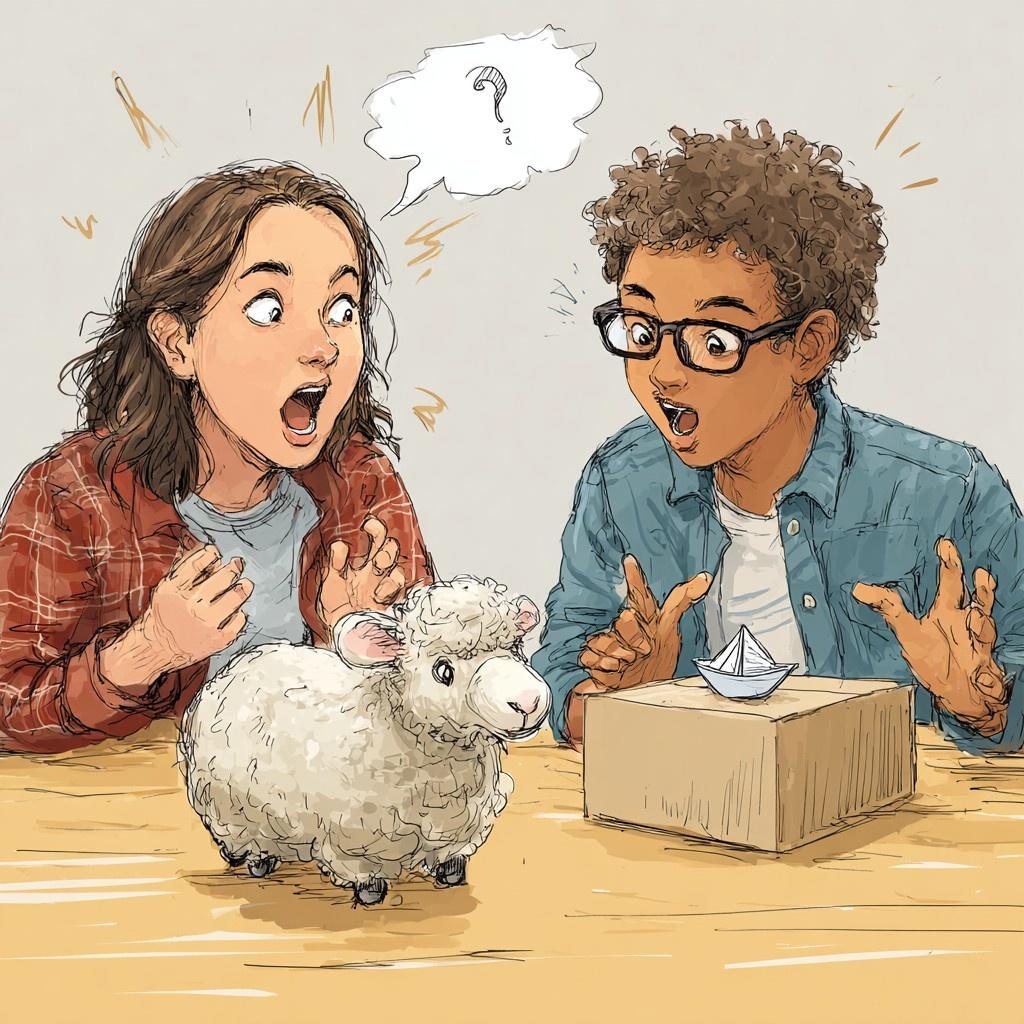
Ship /ʃɪp/ and sheep /ʃiːp/ differ in one vowel. A ship travels on water; a sheep is an animal. Use the recordings below to hear the contrast, try a three-question listening quiz, then practise the words in your own sentences.
What is the difference between /ɪ/ and /iː/?
For /iː/ in sheep, the tongue is high and toward the front of the mouth. For /ɪ/ in ship, it is usually a little lower and less far forward. The lips are unrounded for both. The exact vowel quality varies across English accents.
Do not rely only on making one sound longer: duration also changes with stress, speaking speed and the sounds around the vowel. In the same setting, /iː/ is commonly longer, but vowel quality matters too. Both vowels are voiced. The /s/–/z/ contrast is a separate consonant distinction and does not explain ship versus sheep.
Compare the UK and US reference recordings for ship and sheep in the Cambridge Dictionary. The examples on this page are prerecorded synthetic speech generated with ElevenLabs using an American English voice; they are a practice model, not the only valid accent.
Six minimal pairs with audio
Play each recording once without speaking. Then replay it and repeat the first word followed by the second. Keep the surrounding consonants as similar as you can.
1. Ship /ɪ/ and sheep /iː/
Meaning: a large boat; an animal.
Try in context: The ship passed the farm. The sheep stayed in the field.
2. Sit /ɪ/ and seat /iː/
Meaning: take a sitting position; a place to sit.
Try in context: Please sit here. This seat is free.
3. Grin /ɪ/ and green /iː/
Meaning: a broad smile; a colour.
Try in context: He gave a grin. He wore a green shirt.
4. Fill /ɪ/ and feel /iː/
Meaning: make full; experience a sensation.
Try in context: Fill the glass. Feel the cold water.
5. Bit /ɪ/ and beat /iː/
Meaning: a small piece; a regular rhythm.
Try in context: Take a small bit. Follow the beat.
6. Slip /ɪ/ and sleep /iː/
Meaning: slide accidentally; rest while unconscious.
Try in context: Do not slip on the floor. I need more sleep.
Listening quiz: which word do you hear?
Listen before opening each answer. Say your choice aloud or write it down. These are self-check questions; the page does not record your voice or calculate a pronunciation score.
Question 1: ship or sheep?
Show answer 1
Sheep. The recording uses the /iː/ vowel.
Question 2: sit or seat?
Show answer 2
Sit. The recording uses the /ɪ/ vowel.
Question 3: live (the verb) or leave?
Show answer 3
Leave. The recording uses /iː/. The verb live, as in “I live here,” uses /ɪ/.
Practise for five minutes
- Listen for one minute. Choose two pairs and repeat the recordings.
- Repeat for one minute. Say each pair slowly, then at a comfortable conversational speed.
- Use sentences for two minutes. Describe a picture or invent a short story using one word from each pair. Ask your Talkio tutor: “Help me practise ship and sheep. Ask one short question at a time and let me answer before giving feedback.”
- Retry for one minute. Pick one correction and say the sentence again. Aim for a clearer meaning, not an identical accent.
For guided feedback on a short fixed English sentence, try the free English pronunciation checker. It has usage limits and does not accept these minimal pairs as custom prompts. Its automated scores are practice feedback, not an official language assessment; microphone quality and accent can affect the result.
For longer conversations, explore English speaking practice with Talkio. You can also compare options in our pronunciation-practice app guide or try English tongue twisters once the individual sounds feel comfortable.
Put what you read into practice
Have real conversations with an AI tutor and get instant feedback on your grammar, vocabulary and pronunciation.